Posts

Showing posts with the label ancient woods

Looking at Evidence of Ancient Woodland @Bel's Wood

Image
At least 44% of ancient woodlands were planted with conifers in the 20th century to respond to the shortage of timber (Woodland Trust) and now the UK has only 2.5% ancient woodland. An ancient wood is one that has been continuously wooded for 400 years ie since 1600. One indicator that there may have been an ancient woodland here is the flowers that grow. Bluebells - native English ones - are one of these indicator species. Native bluebells are more delicate than Spanish Bluebells. They have flowers on one side of the plant so drupe and their leaves are narrower. They also have a distinctive scent while non natives do not. Bel's Wood has native bluebells growing there.        There is an increased abundance of bluebells this year especially noticeable in open areas. Last year they were more visible under the trees. The site has not been grazed in the last 12 months which will be the first time that has happened for a long time and so last year the plants will...
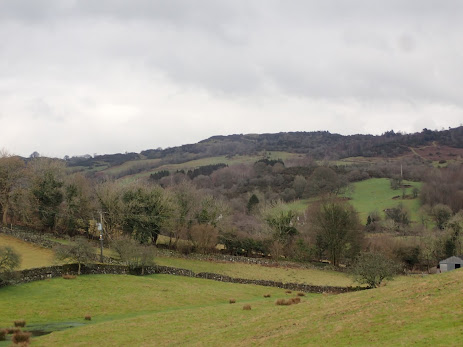
History of the land: Gilpin Valley and Starnthwaite , South Cumbria

Image
Using information about the long term history of the South Lakes and what is known about local villages from publicly available sources this is what I now know about the plot that is now Bel’s Wood. I have given the links I have used and am particularly grateful to the Crosthwaite & Lyth Valley website which gives a good long term history or the area with illustrations - link here https://www.crosthwaiteandlyth.co.uk/html/cameos/cameochapter3.php The plot is in the Gilpin Valley carved out by the River Gilpin which appears to rise in the Gilpin Plantation to the north. This flows south and briefly joins the River Kent before it arrives into the sea feeding Morecambe Bay. The hamlet of Starnthwaite is the closest settlement.  The ancient history of the Lake District shows that the land has been occupied initially by Neanderthals (130,000 BC) and then after the ice age by Homo Sapiens circa 12,000 BC. A warmer climate led to forestation of the land.  From 5,500BC the...